
· by Michael Blair, Nashville's Pressure Washing
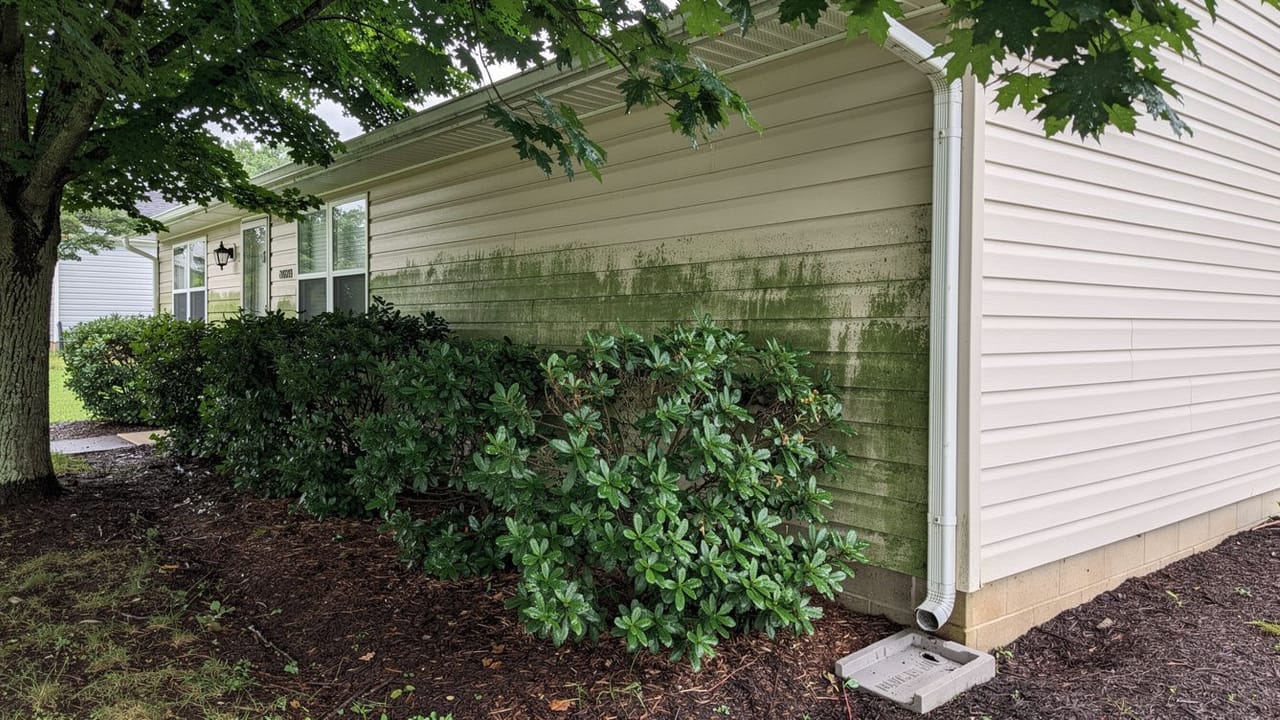
When the shaded side of a house turns green, most homeowners call it mold. It may be algae, mildew or some of each, and for our house washing the name changes very little, because we clean the green the same way whatever it turns out to be. What the color does tell you is that the wall stays wet.
Why does the north side of a house turn green?
Shade keeps it wet, and it’s the side we check first. The house shades its own north wall, trees often shade it further, and a wall that gets little sun stays damp long after rain or a heavy dew. The EPA’s guidance is written for the inside of a house, but its starting point carries outdoors: its mold course names moisture as the most important factor influencing mold growth indoors, and says molds are found outdoors as well as in.
Shrubs pushed up against the siding, a branch hanging over the eave or a sprinkler head that soaks the wall every morning give it even less chance to dry. EPA’s chapter on why and where mold grows lists landscaping, gutters and downspouts that send water into or under a building among the moisture problems to look for.
Removing it properly
We soft wash it, which means a cleaning solution put on at low pressure, given time to work and then rinsed away. On vinyl, the siding makers’ own advice points the same direction. The Vinyl Siding Institute’s installation manual starts with rain or a garden hose, moves to a soft car-washing brush, and for mildew adds liquid laundry bleach to a detergent solution. It warns that stiff brushes and abrasive cleaners can change the gloss and leave the siding splotchy, and it says to wash a whole house from the bottom up so it doesn’t streak.
Bleach is strong stuff, and the rinse matters as much as the solution. EPA’s brief guide to mold and moisture warns never to mix chlorine bleach with other cleaning solutions or with detergents that contain ammonia, because toxic fumes could be produced, and it points out that dead mold can still cause allergic reactions, so killing it is not enough and it has to be removed. The same VSI manual tells you to protect shrubs from direct contact with cleaning agents. Our crews wet the beds under the wall first and give them a long rinse at the end.
- Soft wash with a dwell time, not high pressure
- Pre-wet and rinse surrounding planting
- Never mix bleach with anything containing ammonia
- Cut back vegetation touching the wall
- Improve airflow where you can
- Expect it to come back if the wall stays damp
How do you stop the green from coming back?
Cut the shrubs back from the siding so air can move and some light reaches the wall, and turn any sprinkler head that hits it. Then follow the roof water. The EPA guide tells homeowners to clean and repair gutters regularly and to make sure the ground slopes away from the foundation, so water doesn’t collect against the house. If the green has spread to the gutters or the roof, our post on soft washing and when it is the right call covers those surfaces.
Nothing we do keeps a shaded wall clean for good. The EPA guide notes that mold spores float through outdoor air, and the agency’s mold course says a background level of spores will remain but won’t grow once the moisture problem is resolved. A wall that still stays wet will go green again, and because how soon depends on the shade and the airflow around it, we don’t promise a number of years.
When it is more than algae
An even green film is mostly a cleaning job. Dark staining with a pattern to it, beneath a window, below a gutter joint or in one vertical stripe, makes us look for a water problem before we treat it as growth.
That kind of stain is worth tracking down, because the wall behind it may be wet, and the EPA guide’s advice is to fix leaks and other water problems as soon as possible. If you have a green or stained wall you’d like us to look at, request a free estimate and we’ll tell you which one we think it is.
Sources
- US EPA, Mold Course Chapter 1: Introduction to Molds — Moisture is the most important factor in mold growth indoors; molds are found indoors and outdoors; unchecked mold can rot wood; a background level of spores remains but will not grow once the moisture problem is resolved
- US EPA, Mold Course Chapter 2: Why and Where Mold Grows — Landscaping, gutters and downspouts that direct water into or under a building are a moisture problem
- Vinyl Siding Institute (Polymeric Exteriors), Vinyl Siding Installation Manual (2020), Cleanup — Rain, garden hose and soft brush first; laundry bleach added to a detergent solution for mildew; avoid stiff brushes and abrasive cleaners; wash bottom to top; protect shrubs from cleaning agents
- US EPA, A Brief Guide to Mold, Moisture, and Your Home — Never mix chlorine bleach with ammonia cleaners; dead mold must be removed as well as killed; clean and repair gutters; slope the ground away from the foundation; spores float through outdoor air; fix water problems as soon as possible
FAQ
The Green on Your North-Facing Wall — questions
Is green algae on siding harmful?
We have not found a study showing that the green film damages vinyl or fiber cement on its own, so on those we treat it mainly as a cleaning job. Wood is different. EPA guidance says unchecked mold growth can rot wood, so a wood wall that stays green and damp deserves closer attention. On any siding, the green is a sign the wall stays wet, and that is worth fixing for its own sake.
How often will I need to wash the north side?
There is no schedule we can honestly promise. It depends on how much shade and airflow that wall gets and whether the moisture feeding the growth has been dealt with. Spores are always in the outdoor air, so a wall that still stays damp will turn green again, while one that dries out after the shrubs are trimmed and the gutters are fixed should hold its color longer.
Will bleach damage my plants?
It can, which is why the Vinyl Siding Institute’s cleaning instructions say to protect shrubs from direct contact with cleaning agents. We wet the plants before we start, keep them wet while we work and rinse them well afterward. A contractor who skips that step should be able to tell you why.
How do you clean algae from vinyl siding?
Start gently, the way the Vinyl Siding Institute’s manual does: a garden hose and a soft car-washing brush, with liquid laundry bleach added to a detergent solution for mildew. Skip stiff brushes and abrasive cleaners, work from the bottom up so it doesn’t streak, and keep the cleaning agents off the shrubs. Never mix bleach with ammonia.