· by Michael Blair, Nashville's Pressure Washing
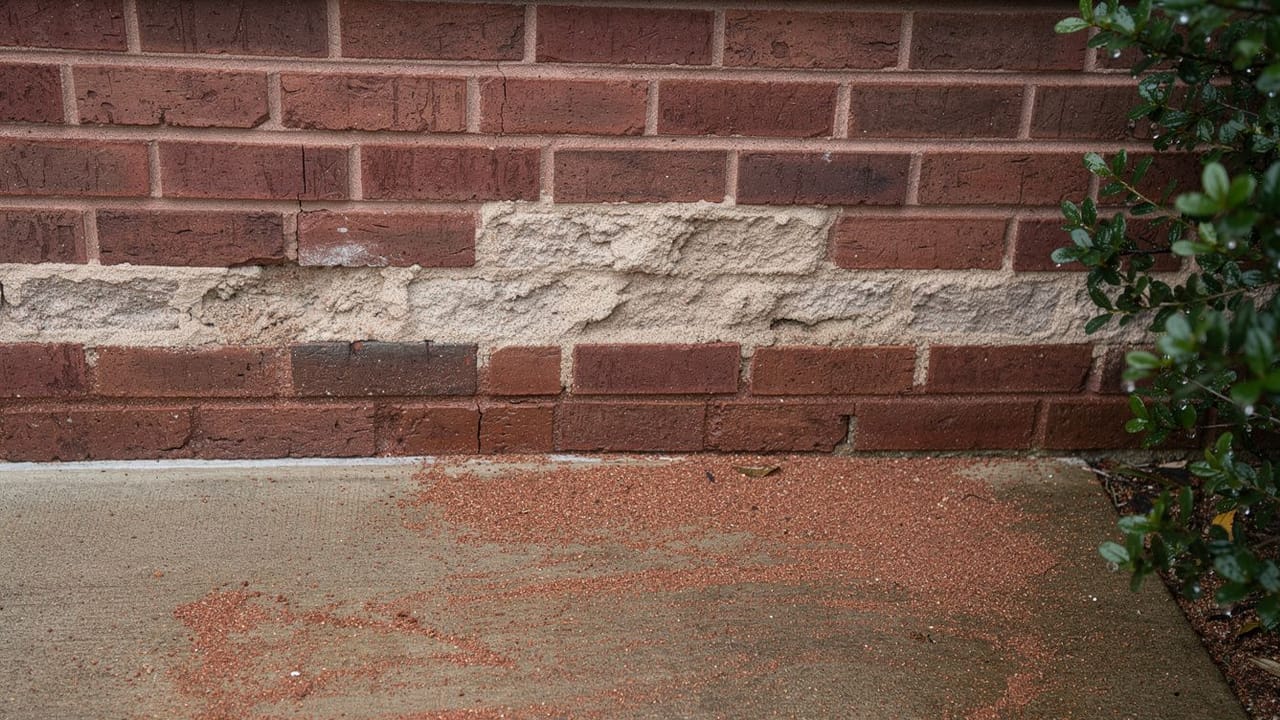
A pressure washer will remove almost anything, including material you wanted to keep. Some of that damage shows the moment the water stops, as a rough, pale band across a brick wall. The rest is water pushed into the wall, where it does its harm out of sight, and neither kind washes back off.
Which surfaces can’t take a pressure washer?
We never put a pressure wand on a shingle roof. Shingles get a cleaning solution and a gentle rinse from us, which is how our roof cleaning is set up, and if yours are still under the manufacturer’s warranty, look up its cleaning terms before anybody climbs a ladder.
Brick is less tough than it looks. The National Park Service’s Preservation Brief 1 on cleaning historic masonry warns that water at too high a pressure, a practice it says is common to "power washing", is very abrasive and can easily etch marble and other soft stones as well as some types of brick. One of its photographs shows a horizontal line of abrasion that a high-pressure rinse left across the bricks of a late-19th-century row house. Wood decking gets a low setting and a wide fan from us, worked along the boards, and vinyl siding has its own problem, which is water.
What soft washing is
Soft washing is how we clean anything a wand would mark. A cleaning solution goes on at low pressure, sits long enough to work, and comes off with a low-pressure rinse, so the nozzle never has to get close. Most of a house wash with us is done this way.
What we’re after is killing the mildew and algae where they grow; shaving the green off the top leaves the growth underneath alive. On older masonry the Park Service brief recommends the same gentle start, beginning at 100 psi or below, even with a garden hose, and going higher only as needed, generally no higher than 300 to 400 psi. It also gives a test we watch for on every wall: grains of stone or sand in the runoff on the ground are a sign the pressure may be too high.
- Shingle roofs: solution and a gentle rinse, no wand
- Wood decks and fences: low setting, wide fan, along the boards
- Vinyl siding: close to garden-hose pressure, spray angled down
- Brick and stone: the lowest pressure that cleans, with an eye on the runoff for grit
- Concrete driveways and walks: where we turn the pressure up
Water behind the surface
Vinyl siding is not the waterproof layer of a wall. The Vinyl Siding Institute’s installation manual calls it a cladding, not a water-resistive barrier, and says it has to be installed over a barrier whose job is to stop water that gets behind the siding from going further into the wall. A wand aimed up under the laps puts water exactly where that barrier has to deal with it, so we keep the spray low and pointed down along the laps, and we keep it out of the soffit vents under the eaves.
The manual’s own cleaning instructions never mention a pressure washer. They start with rain or a plain hose and a soft-bristled brush on a long handle, and they steer you away from stiff bristles and scouring cleaners, which can change the siding’s sheen or leave it blotchy. Where the manual does give a direction, it is upward: begin at the bottom of the house and finish at the top so the walls don’t streak. That is the order you move across a wall; the nozzle itself still points down.
Brick takes water in as well. The Park Service brief says to make sure the mortar joints are sound and the building is watertight before any water cleaning, because otherwise water can seep through to the interior and leave rusted metal anchors and stained, ruined plaster. It also rules out water cleaning when frost is likely, since water inside the masonry can freeze and cause spalling and cracking.
What should you ask a contractor before anything is sprayed?
Get a contractor to walk the house with you and say, surface by surface, how hard they will spray it and with what, and ask straight out whether the roof gets a soft wash. A company that plans to take a pressure wand to your shingles has answered the most important question already. Our post on what to ask a pressure washing company has the rest of the list, and the one on soft washing and when it is the right call goes further into the method.
Ask how they protect the planting, too. The Park Service brief says chemical cleaners may damage trees, shrubs, grass and plants, and the siding manual tells you to keep cleaning agents off shrubs. If you’d like us to look at your house before anything gets sprayed, we’ll come out and give you a free estimate.
Sources
- Robert C. Mack and Anne Grimmer, National Park Service, Preservation Brief 1: Assessing Cleaning and Water-Repellent Treatments for Historic Masonry Buildings (2000) — High-pressure "power washing" is very abrasive and can etch soft stone and some brick; a high-pressure rinse left a line of abrasion across brick; start at 100 psi or below, generally no higher than 300 to 400 psi; grit in the runoff means too much pressure; unsound joints let water reach the interior; no water cleaning near frost; chemical cleaners may damage plants
- Vinyl Siding Institute (now Polymeric Exteriors), Vinyl Siding Installation Manual (2022 edition) — Vinyl siding is a cladding, not a water-resistive barrier; clean with rain, a garden hose and a soft brush; stiff brushes and abrasive cleaners change the gloss; wash bottom to top to prevent streaking; protect shrubs from cleaning agents
FAQ
What Pressure Washing Can Permanently Damage — questions
Can you pressure wash a roof?
We won’t. Shingle roofs get a cleaning solution and a low-pressure rinse from us, never a pressure wand, and that is the only way we clean one. If the roof is still under the manufacturer’s warranty, check what the warranty says about cleaning before anyone goes up.
Will pressure washing damage vinyl siding?
It can. Vinyl siding is a cladding rather than the waterproof layer, so water forced up behind the laps ends up against the barrier underneath, which is there to keep it from going further into the wall. The Vinyl Siding Institute’s manual sticks to a hose and a soft brush for cleaning it, and we keep the spray low and angled down along the laps.
What is soft washing?
A cleaning solution applied at low pressure, left to work for a while, then rinsed off, so the chemistry does what pressure would otherwise do by force. We use it on roofs, siding and anything else a wand would mark. How long the result lasts depends on the house and where it sits, so we don’t quote a number of years.
Does pressure washing damage brick?
It can. The National Park Service’s Preservation Brief 1 calls high-pressure water very abrasive and says it can etch soft stone and some types of brick. On older masonry we follow its advice, starting at 100 psi or less and generally staying under 300 to 400 psi, and grit in the runoff tells us to back off.