
· by Michael Blair, Nashville's Pressure Washing
The finish is the visible part and the preparation is the part that decides how long it lasts. In the Wood Handbook from the USDA Forest Products Laboratory, inadequate surface preparation sits on the short list of the most common reasons paint and solid-color stain fail early, next to water and wood that weathered before anyone finished it. Drying is the step people are most tempted to cut short.
Clean, then brighten
A deck cleaner is there for mildew and dirt. Many of the ones on the shelf are built around sodium percarbonate, an oxygen bleach, and the handbook’s chapter on finishing wood reports it as kinder to wood than chlorine bleach while still clearing mildew. Cleaners made with sodium hydroxide are strongly alkaline and pulp the wood surface, and the handbook keeps them for a last resort, so we read the label before anything goes on the boards.
Gray is a separate matter. Sun and rain wash the colored compounds out of the top layer of the wood, and by the handbook’s account no cleaner puts them back; color comes from stain. A brightener follows the cleaner, and many are made with oxalic acid. Its real job is iron stains from fasteners and the dark bleed from the wood itself, it has no effect on mildew, and the boards get washed down thoroughly once it has done its work. The only neutralizing step the handbook describes is after an alkali paint stripper, where a mild acid follows, since any alkali that stays behind may break down both the wood and the next coat.
How much pressure is safe on a wood deck?
We wash a deck at low pressure, with a wide fan held at a steady distance and strokes that run along the boards. The handbook rates low-pressure washing as less damaging than sandblasting, and warns that pressure strong enough to blast off tightly bonded paint can easily erode the wood deeply. It wears the softer earlywood away faster than the dense latewood and leaves raised ridges that are hard to refinish.
Once the grain is ridged, sanding is the usual way back to a flat board, and that is slow going across a whole deck. Wood is one of several surfaces in our post on what pressure washing can permanently damage. If the old coating is paint on an older house, say so before anyone washes it, because the handbook says power washing is not suitable for paint containing lead.
- Mildew cleaner with dwell time, then a brightener for iron or tannin stains
- Low pressure, wide fan, with the grain
- Dry wood before any finish goes on
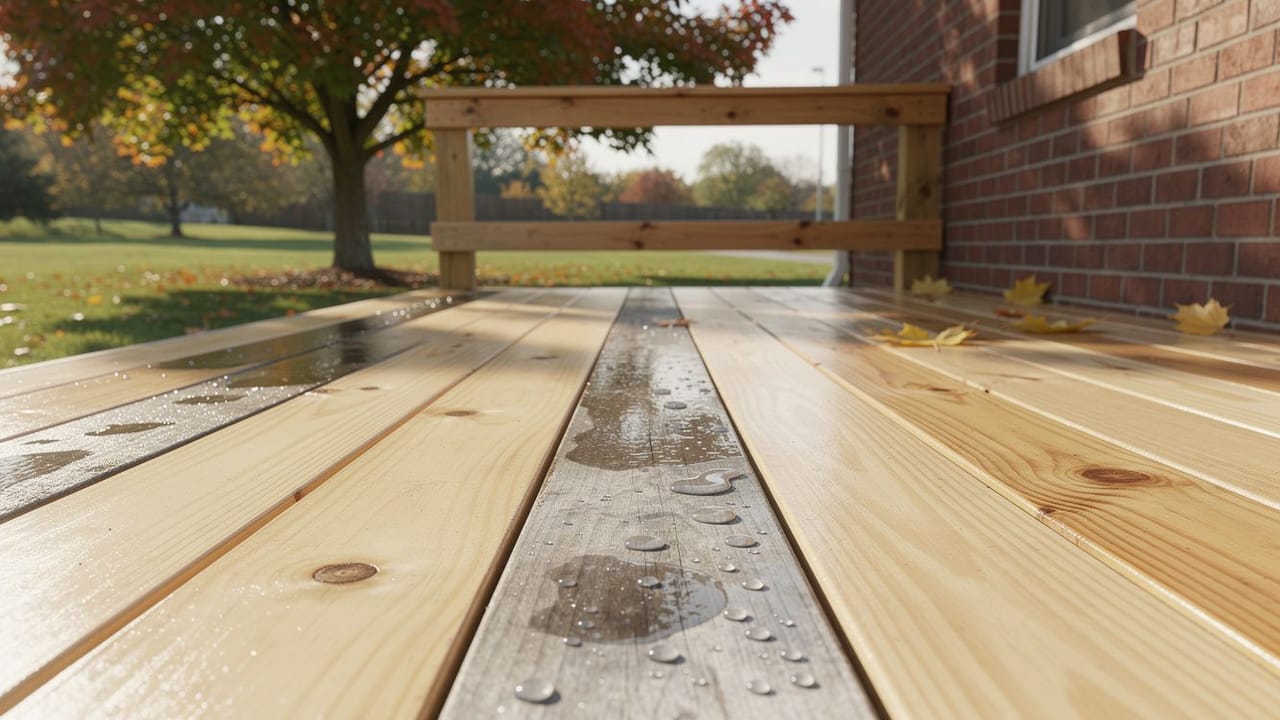
- Water drops on the boards to find leftover sealer
- Replace decayed boards and sand rough ones first
Drying takes longer than it looks
We don’t put a fixed number of days on it. Sun, shade, airflow and how much water went into the wood all change how long a washed deck takes, and the stain’s own label sets the drying time for that product. Underneath both is the handbook’s plainest line on the subject: nothing will coat wet wood well.
Water drops tell you less than people expect. On a finished deck, the handbook treats water beading up on the surface as the sign a repellent is working. On a deck you have just cleaned, a bead means sealer is still on that board and it needs more cleaning; a drop that soaks in only says the old finish is gone, and it says nothing about how wet the wood is underneath.
The waiting is also part of why we lean toward penetrating stains on decks. The handbook calls film-forming finishes extremely challenging to keep on a deck, with peeling very common, while a penetrating stain or water repellent needs refreshing every few years for far less work than stripping a failed coating.
What should be fixed before a deck is stained?
Replace popped fasteners, sand splintered areas and deal with any rot before staining. The handbook says decayed wood does not hold paint and should be replaced, and it suggests probing suspect spots with a small-tipped screwdriver, since a surface can look sound over decay. Finishing over damage only makes the repair harder later.
This is also the point to check the structure, because the ledger, posts and joist hangers are easy to see while the deck is stripped. The American Wood Council’s deck construction guide, DCA 6, requires galvanized or stainless steel joist hangers and corrosion-resistant flashing wherever a ledger board meets a wood-framed wall, so rusted hangers or a ledger with no flashing are worth showing to a deck builder before the stain goes on. The washing itself is what our deck and fence cleaning covers, and once the repairs are sorted, send us a note for a free estimate.
Sources
- USDA Forest Service, Forest Products Laboratory, Wood Handbook: Wood as an Engineering Material (FPL-GTR-282, 2021) — Most common causes of premature failure of film-forming finishes: water, weathering before finishing, inadequate surface preparation, thin film
- Wood Handbook, Chapter 16: Finishing Wood (PDF) — Oxygen-bleach and sodium hydroxide cleaners; graying and color; oxalic acid brighteners and rinsing; low-pressure washing and earlywood erosion; lead paint; nothing coats wet wood; water beading; film-forming finishes peel on decks; replace decayed boards
- American Wood Council, DCA 6: Prescriptive Residential Wood Deck Construction Guide (2015 IRC) — Joist hangers galvanized or stainless steel; corrosion-resistant flashing at a ledger on a wood-framed wall
FAQ
Cleaning a Deck Before You Seal It — questions
Do I need a deck brightener or is cleaner enough?
It depends on what is on the wood. The cleaner deals with mildew and dirt. A brightener, often oxalic acid based, is for iron stains from fasteners and the dark bleed from the wood itself, and the Wood Handbook notes oxalic acid does nothing for mildew. If the boards come up clean and even after washing, a brightener mostly changes how bright they look, and it needs a thorough rinse either way.
How long does a deck need to dry before staining?
Until the wood is dry through, and at least as long as the stain label asks for that product. Sun, shade, airflow and how much water went into the boards all change it, so we do not promise a set number of days. A drop of water that beads on a cleaned board means old sealer is still there; a drop that soaks in only shows the surface is open, so it is no test of whether the wood is dry.
Can I stain a deck the same day I clean it?
No. The wood needs to dry through, and a finish put on wet wood does not coat it well. Film-forming stains are the most likely to suffer, because they can keep the wood from drying and then peel, which is one reason we lean toward penetrating stains on decks. The Wood Handbook lists water and poor surface preparation among the most common causes of early finish failure.
Why does my deck stain keep peeling?
Often because it is a film-forming finish, which the Wood Handbook calls extremely challenging to keep on a deck, where peeling is very common. Water, wood left to weather before finishing and poor surface preparation are on its list of common causes too. We lean toward penetrating stains, which need refreshing every few years for far less work.