· by Michael Blair, Nashville's Pressure Washing
Concrete absorbs. Once a stain has soaked in, a pressure washer usually lightens it and leaves the rest behind, and the National Park Service’s Preservation Brief 15 on historic concrete says much the same of water cleaning in general: it lifts surface soiling from sound concrete but is typically not effective at removing staining. So each type of stain gets its own chemistry, and our driveway and concrete cleaning starts with working out which ones are on the slab.
How do you get oil out of a concrete driveway?
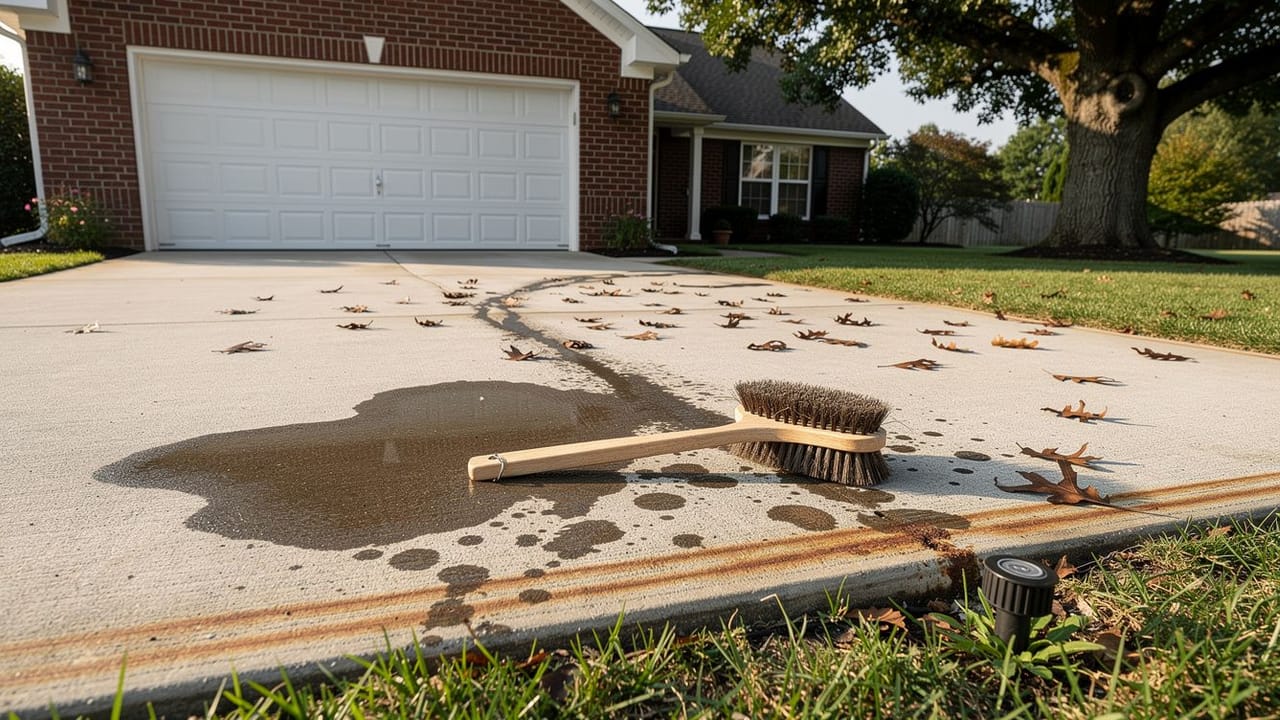
We put down a degreaser, give it time to work, scrub it with a stiff brush and then rinse. For an older stain that has set, we use a poultice instead: an absorbent material mixed with a solvent, spread on thick and covered, which pulls some of the oil back up as it dries.
A poultice takes a day or two, and on an old stain it has done more for us than turning up the pressure ever did. Pressure has its own cost, too. The same Park Service brief warns that high-pressure washing is generally damaging to concrete on historic structures, and the siding, wood and softer surfaces around a newer house have their own list in the damage a pressure washer can do for good.
How do you get rust stains off concrete?
Rust needs a remover made for it, and the ones we use are mild acid products. The NPS brief allows that detergent cleaners or mild, diluted acid cleaners may be appropriate for staining, and it says products containing strong acids such as hydrochloric (muriatic) or hydrofluoric acid should not be used, because they damage concrete and are harmful to people, animals and the environment. The degreaser that lifts an oil spot does little for rust in our experience.
Most of the orange we see traces back to water or metal. The EPA’s guidance on secondary drinking water standards lists reddish or orange staining as an effect of water carrying more than 0.3 mg/L of iron, and black to brown staining above 0.05 mg/L of manganese, so a sprinkler that wets the slab with iron-bearing water can keep putting it back. Metal patio furniture, planters and tools left standing for a season leave rust rings of their own.
- Oil: degreaser, dwell time and a brush, then a poultice for old stains
- Rust: a mild acid rust remover, never muriatic acid
- Organic staining: a cleaning solution with dwell time and a scrub
- Efflorescence: brush it off dry, then find the water
- Always test in an inconspicuous area
Organic staining
Leaf tannin, algae and mildew are a different job. The NPS brief names dirt accumulation and organic growth among the causes of staining on concrete, and the EPA’s mold cleanup guidance, though written for inside the house, gives advice that carries over to a slab: scrub mold off hard surfaces with detergent and water, then let it dry completely. We use a cleaning solution suited to the concrete, give it dwell time and scrub before the rinse.
That is the stain where extra pressure is least needed, since the solution and the brush do the work and the wand only rinses. Chemicals carry a risk of their own, because the Park Service notes that chemical treatments can change how concrete looks, bleaching it among other effects, and it calls for trial samples before any full-scale cleaning; we try ours on a corner first. White powder is something else again. The brief defines efflorescence as soluble salts deposited on the surface by water moving through the concrete, so we brush it off dry and look for where the water is getting in.
Sealing afterwards
A penetrating sealer cuts down how much the slab absorbs. In the NPS brief’s description, clear penetrating sealers make the fine cracks and pores of concrete water-repellent, though they do not bridge or fill cracks, and in our experience a sealed driveway gives up its next stain more easily. Because it soaks in rather than forming a coating, it leaves no surface film to peel. It can still change the look of the slab: the brief warns that treated areas may show up after rain against untreated concrete, and that once applied a penetrating sealer cannot be effectively removed, which is one more reason for a test patch.
We apply it only to clean, dry concrete, and the brief notes these sealers need periodic reapplication. How long a washed slab should dry, and which sealer suits which surface, are in our post on washing, drying and sealing a slab, and our concrete sealing page covers the service. If there is a mark on your driveway you cannot put a name to, request a free estimate; we identify the stain first and pick the product after.
Sources
- National Park Service, Preservation Brief 15: Preservation of Historic Concrete — Water cleaning typically not effective on staining; high-pressure washing generally damaging to historic concrete; mild diluted acid cleaners, never muriatic or hydrofluoric acid; chemicals can bleach concrete; trial samples first; staining from dirt and organic growth; efflorescence defined; penetrating sealers water-repellent, may change appearance, irreversible, need periodic reapplication
- U.S. EPA, Secondary Drinking Water Standards: Guidance for Nuisance Chemicals — Iron above 0.3 mg/L causes reddish or orange staining; manganese above 0.05 mg/L causes black to brown staining
- U.S. EPA, Mold Cleanup in Your Home — Scrub mold off hard surfaces with detergent and water, and dry completely
FAQ
Getting Stains Out of a Concrete Driveway — questions
How do I remove an old oil stain from concrete?
We use a poultice: an absorbent material mixed with a solvent into a paste, spread thickly, covered and left to dry over a day or two, which pulls some of the oil back up out of the concrete. A fresh spill responds to a degreaser, dwell time and a stiff brush. Pressure washing on its own usually only lightens a stain that has soaked in.
Why does my driveway have orange stains?
Usually rust. The EPA lists reddish or orange staining as an effect of water carrying more than 0.3 mg/L of iron, so a sprinkler that throws iron-bearing water onto the slab is one suspect, and metal furniture or planters left standing are another. It needs a mild acid rust remover; strong acids such as muriatic acid damage concrete and should not be used. If the sprinkler is the cause, aiming it away from the slab keeps the stain from coming back.
Should I seal my driveway after cleaning?
A penetrating sealer is worth applying to clean, dry concrete. It makes the pores water-repellent, so the slab takes in less, and in our experience the next clean is easier. It forms no surface film to peel, but clear sealers can change how concrete looks, especially when wet, and they cannot be removed once applied, so test a small area first. Penetrating sealers need reapplying periodically.
What causes black stains on a concrete driveway?
Usually manganese in the water or organic growth. The EPA lists black to brown staining as an effect of water carrying more than 0.05 mg/L of manganese, and leaf tannin, algae and mildew darken a slab as well. The organic kind comes off with a cleaning solution, dwell time and a scrub, tested on a corner first.