
· by Michael Blair, Nashville's Pressure Washing
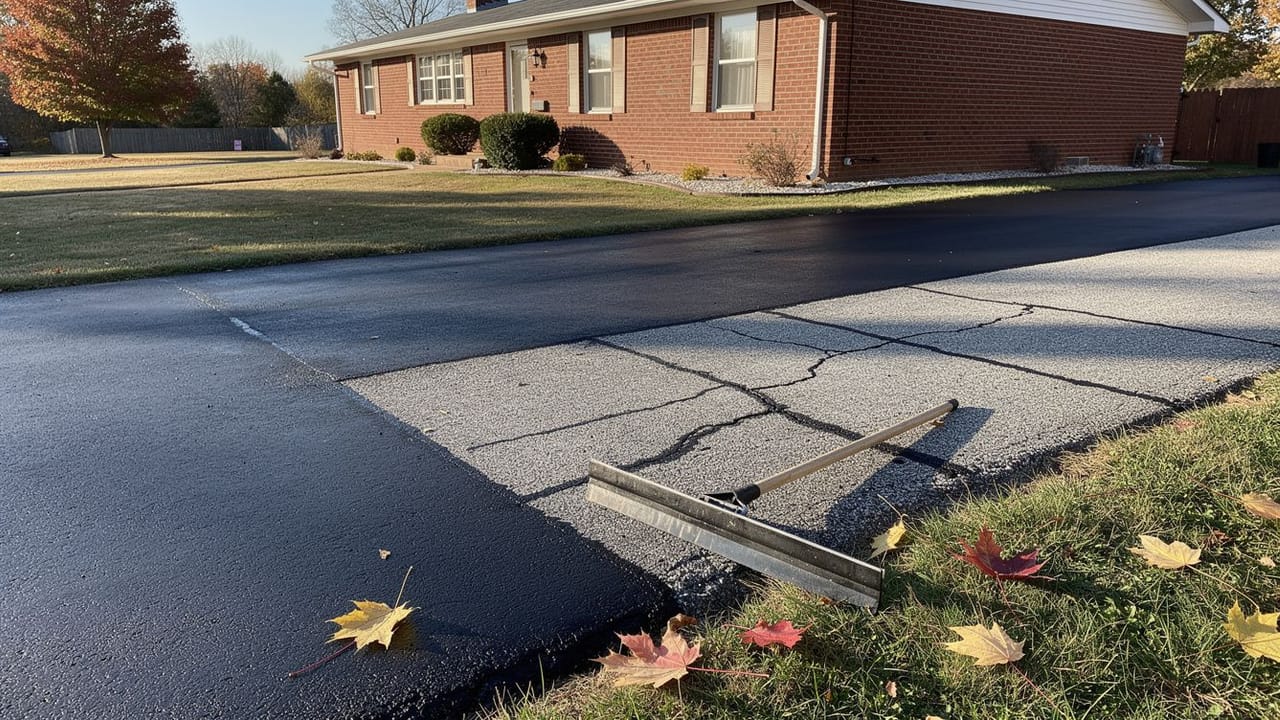
An asphalt driveway goes gray, then rough, then starts opening hairline cracks along the edges and around the low spots. Sealcoat slows that down, and plenty of Nashville homeowners think about driveway sealing in the fall, once the summer heat is gone and the drive has taken another year of sun. Fall works, with one catch. Sealcoat cures by drying, it needs warmth and a dry forecast to do that, and by late October in Middle Tennessee the days that qualify are getting scarce.
What sealcoat does and does not do
Asphalt pavement is crushed stone held together by a petroleum binder. SealMaster’s page on asphalt sealcoating says that binder starts to oxidize and weather soon after the pavement is laid, which is how a fresh black drive ends up a drab gray. Let it go long enough and the surface ravels, which the Federal Highway Administration’s pavement distress manual defines as stone particles coming loose as the binder wears away. Sealcoat is a thin coat over the top; the data sheet for SealMaster’s MasterSeal Concentrate describes that product as an asphalt emulsion mixed on the job with water and sand, and the company’s sealcoating page says the layer blocks water, oils and UV from the pavement underneath.
It is a surface coating, so it does nothing for what is happening below. Cracks are filled before it goes down, and SealMaster’s page on crack filling warns that cracks left open let rain flow through the pavement and erode the base. Where the base has already given way, we tell the owner that section needs patching or repaving, and we do not put sealer over it to make it look finished.
The temperature and rain window
An asphalt emulsion sealer cures as its water evaporates. The MasterSeal sheet gives a drying time of two to six hours, measured in the lab at about 73 degrees and 50 percent humidity, and wants each coat dry before the next one goes on. That sheet and the data sheet for SealMaster’s polymer-modified sealer both require the surface and the air to be at least 50°F and rising while it is applied, and the MasterSeal sheet adds that the temperature should not be expected to fall below 50°F for at least 24 hours afterward. SealMaster’s sealcoating page also says not to apply it when rain is likely within the same 24 hours. On a cool, overcast day we plan for a coat to take longer than the lab figure.
The Nashville calendar closes in on that rule earlier than most people expect. The National Weather Service’s Nashville climate records put the normal low at 61.8°F in September, 49.9°F in October and 39.2°F in November, with the average first freeze on November 11. September is usually comfortable, October turns marginal as the nights cool, and by November the overnight lows sit well under what the label allows for the day after application. November is also wetter than October, with 3.86 inches of rain in a normal year against 3.36. If the window has closed, crack filling can still go ahead: SealMaster’s guide to repairing asphalt cracks says hot-pour fillers can be applied as low as 40°F, though cold-applied fillers want warm, dry weather. The sealing waits until spring nights hold above 50, and with a normal low of 48.9°F in April and 58.3°F in May, that usually means late April or May.
- Air and pavement at least 50°F and rising during application
- No rain expected within 24 hours of application
- No drop below 50°F forecast for the 24 hours after it goes down
- Enough sun and warmth for each coat to dry before the next
What has to happen before sealcoat goes down?
We start with clean, dry asphalt. The drive is blown off and washed, and oil and transmission spots are scrubbed with a degreaser and treated with an oil-spot primer before any sealer goes near them. Grass creeping over the edges is cut back, and the cracks are cleared out; SealMaster’s crack repair guide says cleaning a crack means removing vegetation, dirt and debris so the filler can flow in and grip the crack walls. Then the surface has to dry completely, and after a fall washing that can mean we come back to seal on another day. Oil stains on concrete are a different job, covered in our post on getting stains out of a concrete driveway.
Cracks matter most going into winter. The Weather Service’s normals give Nashville about 8 nights at or below freezing in November, 16 in December, 19 in January and 15 in February, and SealMaster’s crack repair guide notes that cracks open wider in cold weather. Fillers come in two kinds: hot-pour, which that guide says is typically used on highways and roads, and cold-applied, which it says is common on home driveways. Either way the crack is cleaned and filled before any sealing, because sealer brushed over an open crack does not stop rain running down through it into the base.
How often does an asphalt driveway need resealing?
How often a drive needs resealing depends on how much sun it takes, how much traffic it carries and how the last coat has worn, and we judge it by looking at the surface. SealMaster’s sealcoating page gives no interval for a home driveway; it says a regularly scheduled sealcoating program will more than double the life of the asphalt, and that the earlier sealer goes on in the pavement’s life, the better. That is a manufacturer talking about its own product, so on a newly paved drive we go by the paving contractor and the sealer’s label on when it is ready for a first coat.
Both the MasterSeal sheet and SealMaster’s sealcoating page call for 24 hours before cars go back on, and we tell owners to allow longer when the weather has been cool. We also ask them not to turn the steering wheel while parked on a new coat. Concrete driveways take a different kind of sealer altogether, which is covered in our post on washing, drying and sealing a concrete slab. If you would like us to look at your drive before the weather turns, ask for a free estimate and we will tell you whether it needs crack filling, sealing or both.
Sources
- SealMaster, Asphalt Sealcoating — Binder oxidizes soon after installation and turns gray; sealer blocks water, oils and UV; 50 degrees and rising; no rain within 24 hours; 24 hours before traffic; regular sealing more than doubles pavement life; the earlier the better
- Federal Highway Administration, Distress Identification Manual for the LTPP Program (FHWA-HRT-13-092), Chapter 1 — Definition of raveling: aggregate dislodged as asphalt binder is lost
- SealMaster, MasterSeal Concentrate data sheet — Asphalt emulsion job-mixed with water and sand; 2 to 6 hour lab drying time; each coat dry before the next; 50°F and rising; no drop below 50°F for 24 hours after; 24 hours before traffic
- SealMaster, Polymer-Modified MasterSeal (PMM) data sheet — Surface and ambient temperature at least 50°F and rising during application
- National Weather Service Nashville, Nashville Climate Records — Monthly normal lows and precipitation; average first freeze November 11; average days at or below 32°F by month
- SealMaster, How to Repair Cracks in Asphalt Pavement — Hot pour down to 40°F; cold-applied wants warm, dry weather and is common on home driveways; cracks open wider in cold; cleaning removes vegetation, dirt and debris
- SealMaster, Crack Filling and Sealing — Unfilled cracks let rain flow through the pavement and erode the base
FAQ
Sealcoating a Driveway Before the Cold Sets In — questions
Is it too late in the year to seal my driveway?
That depends on the forecast more than the date. The sealer labels we read want the air and pavement at 50 degrees or warmer and rising, no rain within 24 hours, and no drop below 50 degrees for a full day after it goes down. In Nashville those days get hard to find once November arrives, so at that point we fill the cracks and wait for spring.
Can you sealcoat over cracks in a driveway?
Fine surface checking is covered along with the rest of the drive, but open cracks are cleaned out and filled first. Sealer laid over an open crack does not keep rain out of it, and water running down through cracks is what wears away the base under the pavement.
How long before I can drive on a freshly sealed driveway?
Sealer makers such as SealMaster call for 24 hours before cars go back on, and we tell owners to allow longer in cool or damp weather because the coating cures by drying. Walk on it only once it is no longer tacky, and avoid turning the wheels while parked on it until the coat has fully hardened.
Does sealcoating extend the life of asphalt?
It slows the weathering, and SealMaster says a regularly scheduled sealcoating program will more than double the life of the asphalt, though that is a manufacturer speaking about its own product. The coat blocks water, oils and UV from the pavement, but it does nothing for the base, so open cracks are filled first and failed sections patched.