
· by Michael Blair, Nashville's Pressure Washing
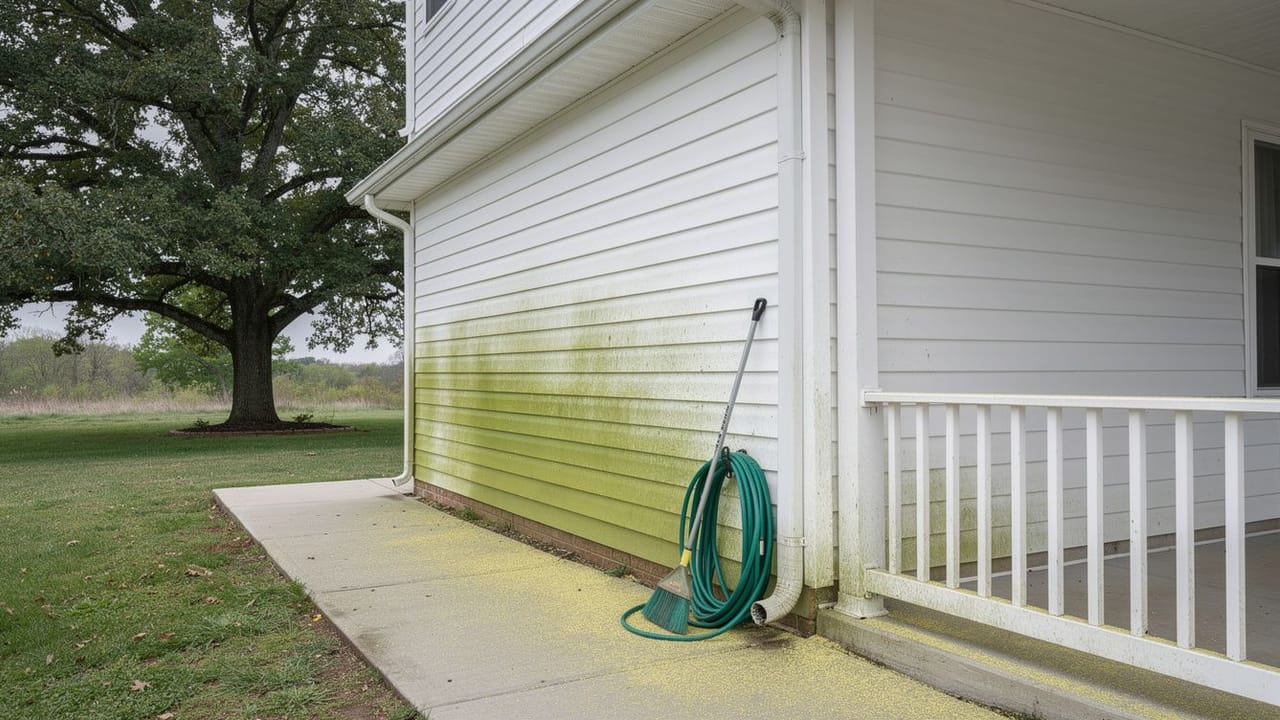
Every spring a film of yellow-green pollen settles on Middle Tennessee houses, and on a lot of them the shaded walls start to turn green by summer. Growth on a wall comes down to moisture: the EPA’s brief guide to mold, moisture and your home says there are many types of mold and none of them will grow without water or moisture. That is why, on the houses we wash, the side that stays damp sets the schedule more than the calendar does. Here is the schedule we work to for each surface, and the reasoning behind it.
How often does a Nashville house need washing?
The interval we give most customers is a whole-house wash every one to two years, sooner on shaded or north-facing elevations, which is where we see the green come back first; the green on a north-facing wall has a post of its own. Driveways and walks under trees get a yearly wash, and open concrete every two or three years. A deck gets washed each year ahead of its sealer, the job covered in cleaning a deck before you seal it. None of these numbers comes from a manufacturer or an agency. They are what has worked on the houses we clean around Nashville, and a sunny lot with few trees can stretch them.
Roofs are the exception. We clean one only when the algae streaks show, and only by soft wash, for the reasons in our post on why a roof is never washed with pressure.
What time of year is best for a house wash?
We book most house washes for late spring, once the pollen has finished falling. A wash in the middle of the pollen season tends to need repeating a few weeks later, which is paying twice for one clean wall.
Autumn is our second window, to get leaves and organic grime off the house before the cold, wet months. We don’t wash in freezing weather, and we keep the solution off a wall that is in full sun, because it dries before it has had time to work. Gutters sit outside our schedule but still count: the EPA’s moisture and mold prevention tips include cleaning and repairing roof gutters regularly, along with grading the ground so water does not collect around the foundation.
- House: every one to two years, after the spring pollen
- Driveway and walks: yearly under trees, every two or three years in the open
- Deck: yearly, before sealing
- Roof: only when algae streaking shows, soft wash only
- Gutters: kept clear on their own schedule
Why it is maintenance not just appearance
Mold is not fussy about what it grows on. The EPA’s mold course, chapter 2 says it can grow on virtually any organic material as long as moisture and oxygen are present, lists wood among those materials, and notes that because mold digests what it is growing on, it can damage a building. Paint is the other reason. The EPA’s mold cleanup page warns that paint applied over moldy surfaces is likely to peel, so a wall that is due for the painter gets washed and dried first.
So we treat a wash on a shaded wall or a run of wood trim as part of keeping the finish in good order, along with cutting back shrubs pressed against the siding. On a roof we stop short of that claim. We take the streaks off, and what algae does to a shingle over the years is a question we leave to a roofer.
What to do yourself
A garden hose, a soft brush and a bucket of detergent and water will clean a single-story wall if you are willing to give it an afternoon. It is the method the EPA’s cleanup page gives for hard surfaces: scrub with detergent and water, then dry completely. If you reach for bleach, the same EPA guide says never to mix it with cleaners that contain ammonia, and to wear gloves made of natural rubber, neoprene, nitrile, polyurethane or PVC. Keep the rinse water out of the street, too. Metro Water Services’ stormwater pollution page explains that storm drains and pipes send runoff directly to local waterways, and that the pollution eventually reaches the Cumberland River, the source of the county’s drinking water.
Two-story walls, roofs and anything that needs a cleaning solution are worth handing over, and the ladder is a bigger reason than the equipment: a wet brush at the top of an extension ladder is the part of this job we would rather a homeowner skip. Our house washing service covers that work, and you can ask us for a free estimate with a photo of the shaded side.
Sources
- U.S. EPA, A Brief Guide to Mold, Moisture, and Your Home — No mold grows without water or moisture; clean and repair roof gutters regularly and slope the ground away from the foundation; never mix bleach with ammonia cleaners; glove materials for bleach
- U.S. EPA, Mold Course Chapter 2 — Mold grows on virtually any organic material, wood included, where moisture and oxygen are present, and can damage a building
- U.S. EPA, Mold Cleanup in Your Home — Scrub hard surfaces with detergent and water and dry completely; paint applied over moldy surfaces is likely to peel
- Metro Water Services, Stormwater Pollution Prevention — Storm drains and pipes send runoff directly to local waterways; the pollution reaches the Cumberland River, the source of drinking water
FAQ
How Often a Nashville House Needs Washing — questions
How often should I wash my house exterior?
We wash most Middle Tennessee houses every one to two years, and shaded north walls sooner, because that is where the green comes back first on the houses we clean. It is a working interval from our own jobs rather than a published standard, and a sunny house with few trees can usually go longer.
When is the best time of year to wash a house here?
We prefer late spring, after the pollen has stopped falling, since washing in the middle of it tends to mean doing the job twice. Autumn is our second choice, to clear organic grime before the cold, wet months. We avoid freezing weather, and we avoid full sun, which dries a cleaning solution before it has had time to work.
Is house washing just cosmetic?
Not entirely. The EPA notes that mold can grow on wood and other organic materials wherever moisture and oxygen are present, that it can damage what it grows on, and that paint applied over a moldy surface is likely to peel. Keeping growth off siding and trim is part of looking after the finish. On a roof we promise a clean surface and leave questions about shingle life to a roofer.
How do you wash the outside of a house yourself?
On a single-story wall, a garden hose, a soft brush and a bucket of detergent and water will do it: scrub, rinse and let it dry completely. Never mix bleach with cleaners that contain ammonia, wear rubber or nitrile gloves, and keep the rinse water out of the street drain. Leave two-story walls and roofs to a crew.